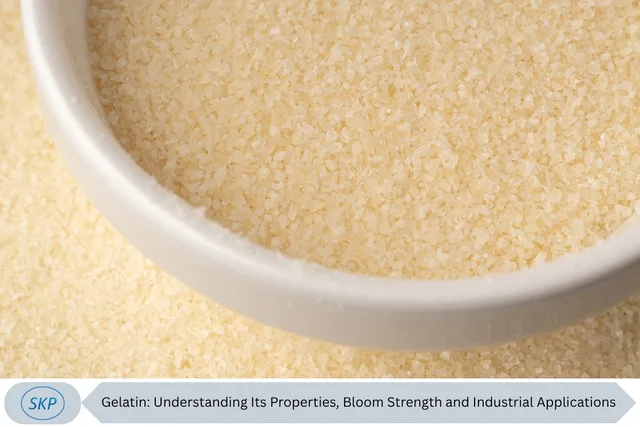
Gelatin: Understanding Its Properties, Bloom Strength and Industrial Applications
Gelatin is a familiar ingredient in desserts and confectionery, but its role extends well beyond the food industry. Manufacturers also use it in pharmaceutical and supplement products where texture, film formation and process performance matter. Yet
specifying gelatin for an industrial application takes more than choosing a product with a suitable name. Its gel strength, viscosity, origin and quality documentation all deserve attention.
For buyers and formulation teams, one of the most common questions is: Which gelatin is right for this product? The answer depends on the finished product and the way it will be manufactured. A soft dessert, a gummy supplement and a capsule shell do not ask the same things of their ingredients. This guide explains the fundamentals of gelatin, introduces Bloom strength and outlines practical questions to ask before purchasing.
What Is Gelatin?
Gelatin is a protein obtained through the partial hydrolysis of collagen from animal sources. Collagen is found in connective tissues such as skin and bone. Processing alters its structure, producing gelatin with properties that make it useful across a wide range of formulations. The United States Pharmacopeia defines gelatin in terms of its collagen origin and the processes used to obtain it, including acid, alkaline, enzymatic or thermal hydrolysis [1].
The word gelatin describes a family of materials rather than one identical ingredient. Raw material, processing method and production conditions can affect the resulting product. In industry terminology, Type A gelatin is associated with acid treatment, while Type B gelatin is associated with alkaline treatment. These labels describe a processing distinction; they do not, by themselves, establish that one type is suitable for every food or pharmaceutical use.
Gelatin is also different from collagen peptides, sometimes called hydrolyzed collagen. Although the two are related by origin, collagen peptides generally do not form the characteristic gels that make gelatin valuable as a texturizing ingredient. They should therefore not be treated as interchangeable in a formulation that depends on gel formation [2].
Why Is Gelatin So Versatile?
Gelatin can perform several functions within a product. Depending on the formulation, it may create a gel, contribute elasticity, stabilize a foam, bind water or form a film. Its usefulness comes from how these properties work together—not simply from its protein content.
One particularly important feature is thermoreversible gelation. Under suitable conditions, a gelatin solution forms a gel as it cools, while heating can return that gel toward a liquid state. This behavior helps formulators create products with a specific texture and processing profile. The outcome is not fixed, however: gelatin concentration, temperature, pH, time and other formulation ingredients can all influence gel strength.
That is why a specification that works in one recipe cannot automatically be transferred to another. Even when the gelatin remains the same, changing the concentration or the rest of the formulation may change the finished product. Small-scale trials are an essential part of selecting an ingredient for commercial production.
What Does Bloom Strength Mean?
Bloom strength is a standardized measure of gelatin gel strength. In a standard test, a prepared gelatin solution is allowed to set under controlled conditions, and the force needed to press a specified probe into the gel is measured. A higher Bloom value generally indicates a firmer gel in this test. It does not mean that the highest-Bloom gelatin is automatically the best choice for every product.
Bloom strength is valuable because it gives buyers and suppliers a shared starting point. Still, a Bloom value describes performance under defined test conditions, not the complete behavior of gelatin in every production line. Finished-product texture also depends on ingredient concentration, pH, processing and other components. Viscosity matters separately: a higher-Bloom gelatin does not necessarily have a higher solution viscosity.
Samin Kala Pouya offers three Bloom options for discussion:
| Available Option | A useful starting point for evaluation |
| 160 Bloom | Formulations where a comparatively softer gel profile may be desirable |
| 180–200 Bloom | Projects seeking a balance of gel strength and the desired finished-product texture |
| 250–270 Bloom | Formulations evaluating a firmer gel profile |
These descriptions are starting points for formulation trials, not guarantees of suitability. For example, capsule development involves requirements beyond Bloom strength alone. Food and supplement developers must likewise test the ingredient in their own recipes and processes before confirming a grade. The appropriate option should be selected against the finished product’s target texture, processing conditions and applicable specifications.
Gelatin in Food Manufacturing
In food products, gelatin is often valued for the texture it creates. It can give a dessert a soft set, contribute chewiness to confectionery or help stabilize aerated products. Its applications include jellies, gummies, marshmallows and dairy-style desserts, among others. Each of these products has a different target experience: a spoonable dessert should not behave like a gummy, and a gummy should not behave like a mousse.
For a food manufacturer, choosing gelatin begins with the desired finished product. How firm should it be? Should it be easy to cut or have a particular chew? How will it behave at the intended serving temperature? These questions help define the formulation trial.
It is equally important to test gelatin within the actual recipe. Acidity, heating history, ingredient interactions and setting time can affect performance. A laboratory gel-strength figure is informative, but the commercial decision should reflect results in the complete product and the conditions under which that product is made.
Gelatin in Pharmaceutical Manufacturing
Gelatin is used in pharmaceutical applications, notably in hard and soft capsules. These uses draw on properties such as film formation, gelation and processability. Pharmaceutical applications also require close attention to the specifications and controls relevant to the intended dosage form.
Here, Bloom strength should not be used as a substitute for a full technical review. A formulation team may also need to consider viscosity, material origin, microbiological criteria, relevant compendial requirements and performance on its equipment. Requirements can differ between hard capsules, soft capsules and other uses.
Before approving any gelatin for a pharmaceutical project, buyers should request the documentation relevant to the proposed material and have their technical and quality teams assess it against the intended application. A general statement that gelatin is used in pharmaceuticals does not mean that every gelatin grade is appropriate for a particular pharmaceutical product.
What Should Buyers Check Before Purchasing Gelatin?
Searching for where to buy gelatin is straightforward; choosing a material that performs consistently is the more important task. A useful purchasing conversation starts with the application rather than the price per kilogram alone.
Consider preparing the following information before contacting a gelatin supplier:
- Intended application: Is the gelatin for a food product, supplement or pharmaceutical formulation? What is the specific finished-product format?
- Target performance: What gel firmness, texture, viscosity or processing behavior does the formulation require?
- Bloom range: Is there an existing specification, or should several options be assessed in trials?
- Material origin: Are there source-related requirements for the product or its intended market?
- Quality requirements: Which specifications, test results and documents must your quality team review?
- Production conditions: How is the ingredient prepared and used, and which process constraints could affect performance?
- Trial results: Has the proposed gelatin been tested in the complete formulation, not only as a standalone gel?
A supplier conversation based on these points is more productive than asking for “the strongest gelatin.” It helps narrow the options while leaving room for technical validation. It can also prevent a costly assumption: two gelatins with similar Bloom values may not behave identically in a particular process, especially when other properties differ.
If you already use gelatin and are considering a different option, compare materials in your own formulation under controlled conditions. Record the differences that matter to the finished product—such as texture, processing behavior and consistency—before making a purchasing decision.
Handling and Storage Matter, Too
Ingredient selection is only part of successful gelatin use. Handling during production matters because prolonged heating of a gelatin solution, extreme pH conditions and microbial contamination can weaken its functional properties. Dry gelatin should be kept in appropriate, well-closed packaging and handled according to its supplied instructions and the manufacturer’s quality procedures.
For production teams, the practical lesson is to define and follow a repeatable preparation method. If hydration, heating or holding conditions change between batches, performance may change as well. Pilot trials should therefore evaluate not only which gelatin to use but also how it will be prepared at the intended manufacturing scale.
Frequently Asked Questions
Is higher-Bloom gelatin always better?
No. Higher Bloom indicates greater gel strength under standard test conditions, but the right choice depends on the product’s desired texture and its formulation. A softer gel may be the goal in one application, while another requires a firmer result. Viscosity and process performance also need separate consideration. ()
Are gelatin and collagen peptides the same ingredient?
They are related, but they are not functionally identical. Gelatin is selected for properties that can include gel formation; collagen peptides generally do not provide the same gelling function. Replacing one with the other can require a substantial reformulation. ()
Which Bloom option should I request?
Start with your finished product and target performance. Samin Kala Pouya’s 160, 180–200 and 250–270 Bloom options provide a range for discussion and evaluation. The appropriate choice should be confirmed through technical review and formulation trials rather than Bloom value alone.
What information should I request before buying gelatin?
Ask for the specifications and documentation relevant to your intended use, then confirm details such as origin, applicable quality requirements and supply terms with the company. Your own technical and quality teams should review the proposed material before approval—particularly for regulated applications.
Choosing Gelatin with Confidence
Gelatin is a versatile ingredient, but getting the most from it requires a clear understanding of the finished product. Bloom strength is an important selection tool; it is not a complete purchasing decision. By considering application, viscosity, origin, quality requirements and real-world trial results together, manufacturers can make a more informed choice.
Looking for gelatin for a food, supplement or pharmaceutical project? Contact Samin Kala Pouya to discuss the intended application and the available 160, 180–200 and 250–270 Bloom options. The team can provide further information so you can evaluate the material against your technical and purchasing requirements.